feature concept

Overview
Bumble was first founded to challenge the antiquated rules of dating. They’ve strived to make it not only acceptable, but necessary for women to make the first move, shaking up outdated gender norms. Their platform prioritizes kindness and respect, providing a safe online community for users to build new relationships. In my role as UX designer, I helped my team develop a new community feature to allow users to feel less pressured and find groups of interest.
What: Friendship app
Target Device: Mobile App
TIMEFRAME: 10 Days
ROLE: UX/UI Designer, UX Researcher, Project Manager
My Team: Megan Linhart, Chris Ramirez, Mair Ahmad
METHODS + APPROACHES: User Research, Business Research, Competitive + Comparative analysis, Affinity Mapping, Persona Building, Feature Prioritization, Wireframing, Prototyping, High Fidelity Mockups, Usability Testing
TOOLS: Figma, FigJam, Google Survey, Trello

“Is it me you’re looking for?”
THE PROBLEM or.. OPPORTUNITY- aha!
Having secured their footing in the dating market, Bumble has moved on to friend-matching. This has come with its own unique set of challenges, as searching for friendship is a uniquely different venture than searching for a romantic partner.
Right now, Bumble’s friend-matching is essentially a clone of their dating platform - you can only search for friends of the same gender, and must make a binary decision on whether to pursue friendship with them - match, or no match. As of this year you can add a general interest to attract a friend to (i.e., looking for a gym buddy, or a gaming partner), but it doesn’t fix the underlying problem of swiping left or right on a human being that wants to hang out with you platonically.
Bumble wants to evaluate the current effectiveness of this approach and determine ways to refine and add features to make the friendship search more effective.
Pain points
What is a friend? What qualities are sought out in them, and how do they differ from the qualities sought out in romantic partners?
Are there different social norms when it comes to pursuing and managing friendships, as opposed to a romantic relationship? What does rejection look/feel like?
What is inherently stressful/awkward about pursuing friendships? How can Bumble manage those aspects to minimize their negative effects?
How do we determine success in the friend search?
Socializing is awkward. Currently, Bumble BFF makes it even worse. What, if anything, can we add or remove from the robotic process to make it less awkward?
“Friends at first sight”
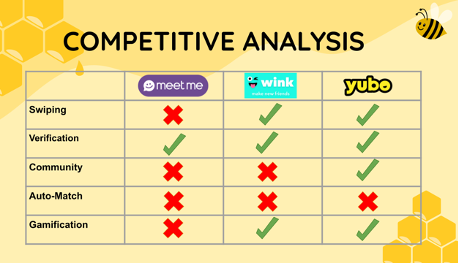
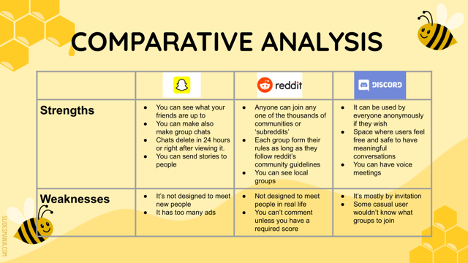
Through some research we found that most apps have a swiping feature. This still feels bizarre for anyone who is looking for a new friendship. Wouldn’t you find it weird to ‘swipe for a friend’ based purely on their looks? We also found that all or most do not have any way to automatch or a communal place for people with similar interests.
User Research
5 interviews, 30 survey responses
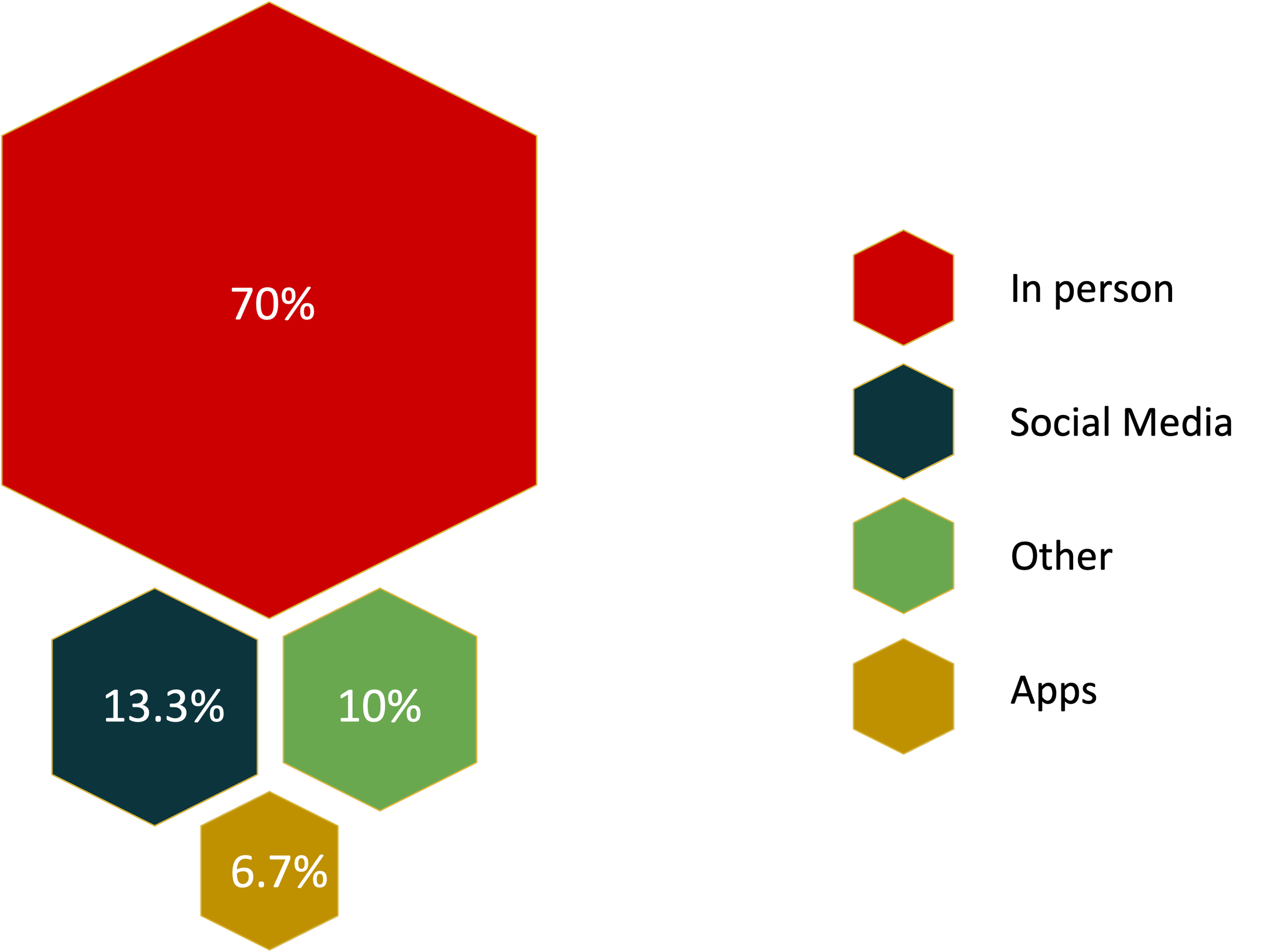
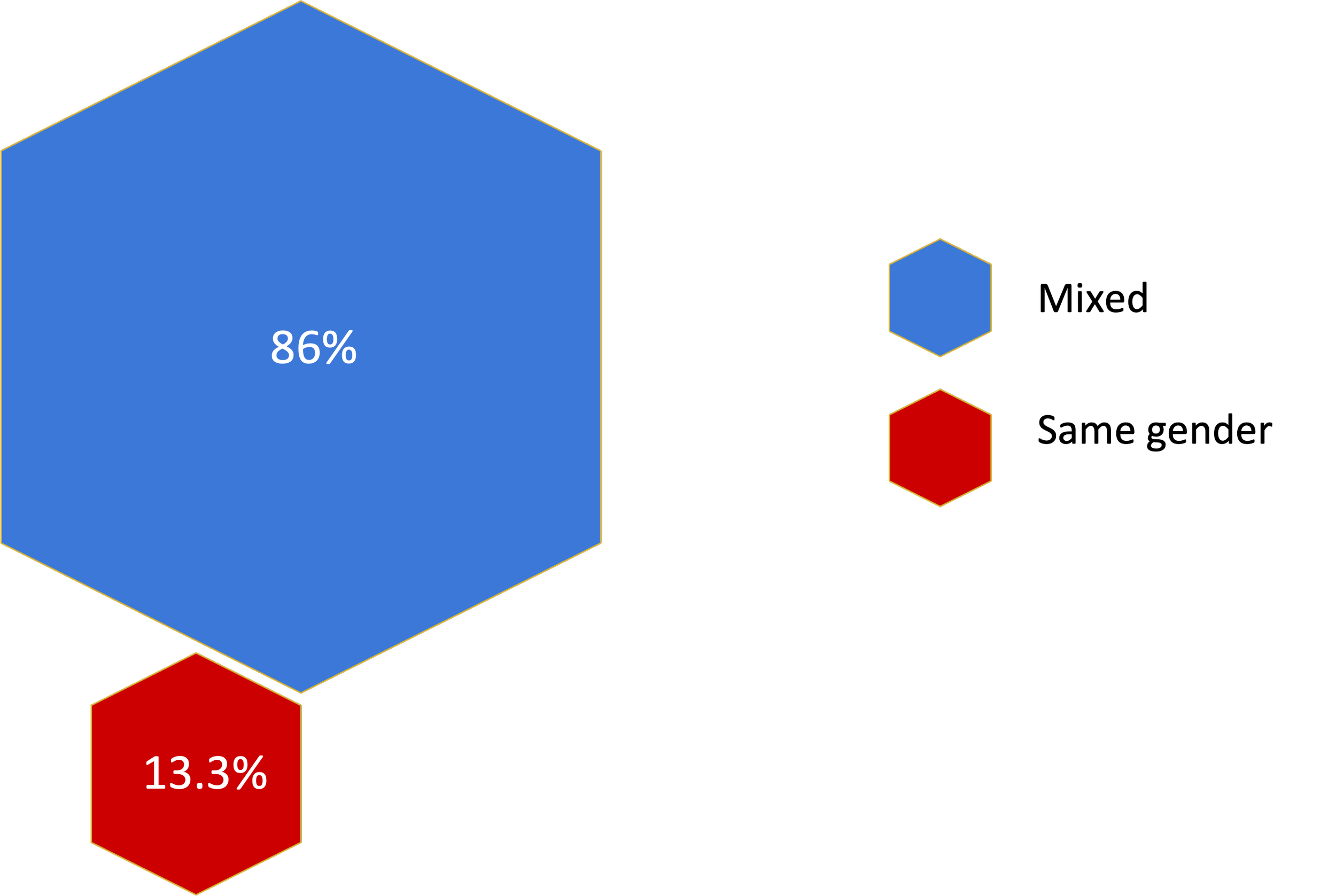
Here is some key data that stood out to us during our survey results.
How do you make friends?
Are your friends of the same gender or mixed?
How might we…
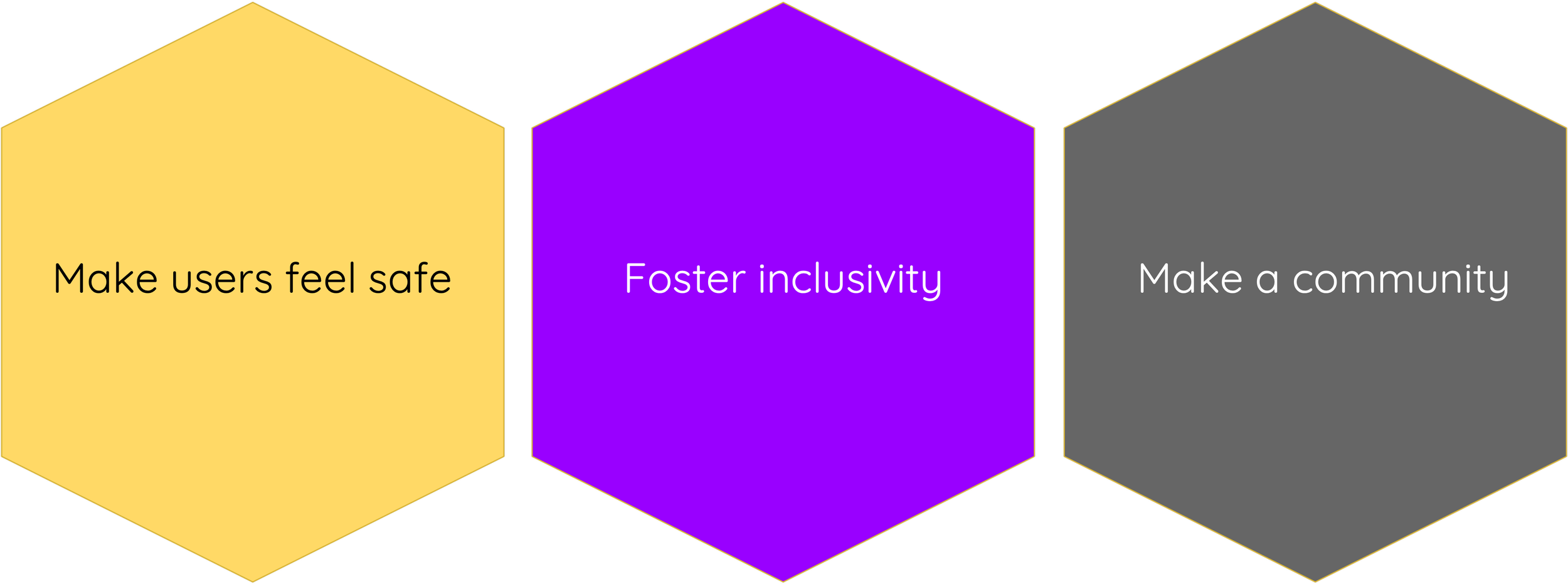
We wanted our users to feel they could be friends with anyone and reduce the pressure that comes with making new friendships.
MSCW

Research Trends
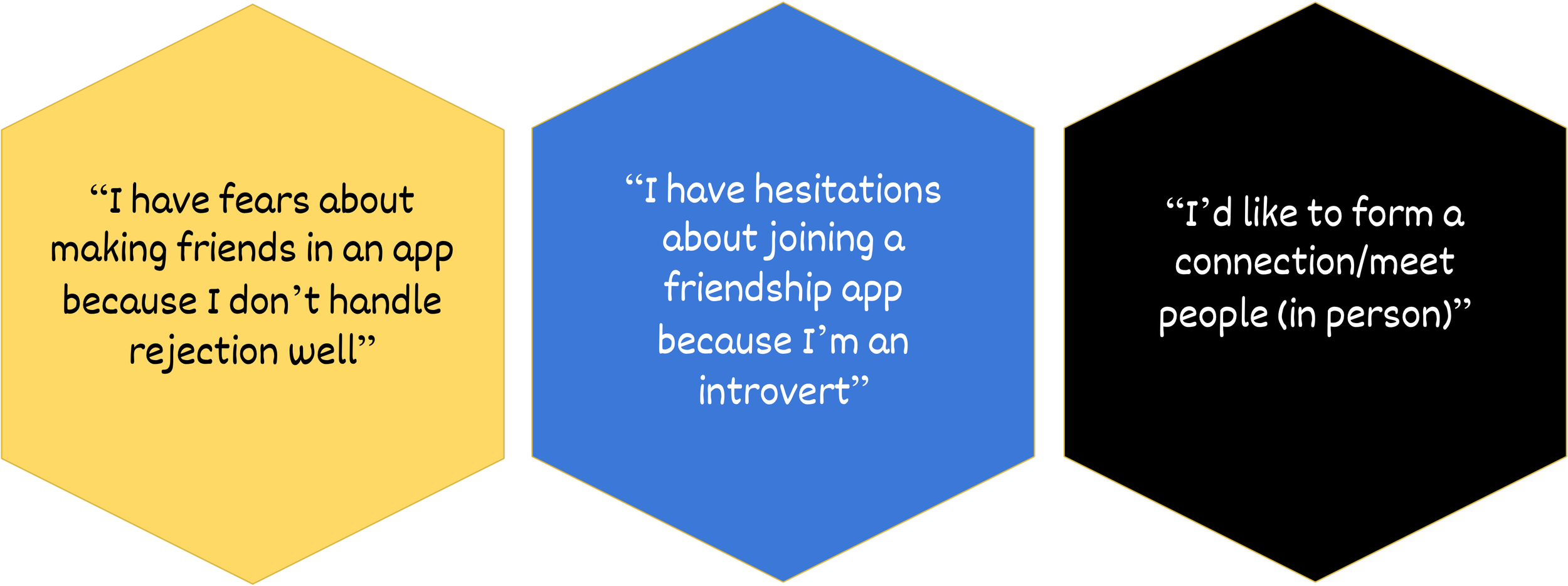
During the Affinity mapping phase it was clear that users were afraid of rejection but still wanted a way to meet people with less pressure. How might we design a feature that encompasses these goals?
Personas
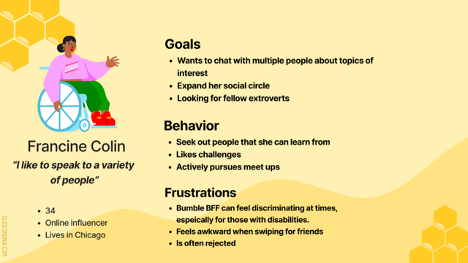
Francine wants meaningful friendships, but is often rejected. However, she enjoys meeting a variety of people and wants to learn from her friendships, and put herself out there. Francine needs a way to make friends without feeling rejected.
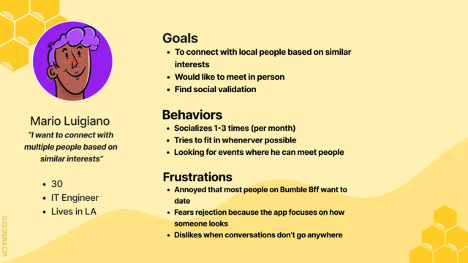
Mario wants to be in validating friendships. However, he thinks he’s weird, and lacks confidence starting conversations. Mario needs a way to make friends without having to initiate conversation.
Journey Map
Francine
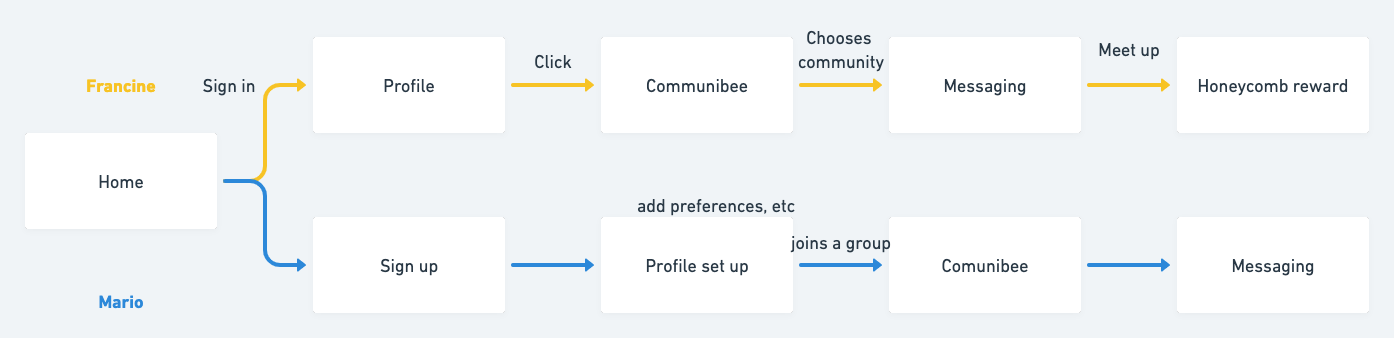
Francine has tried swiping for individual friends, but hasn’t had much luck. Because of her personality type, she wants to talk with a group of people. She starts by finding a group chat based on her interests.
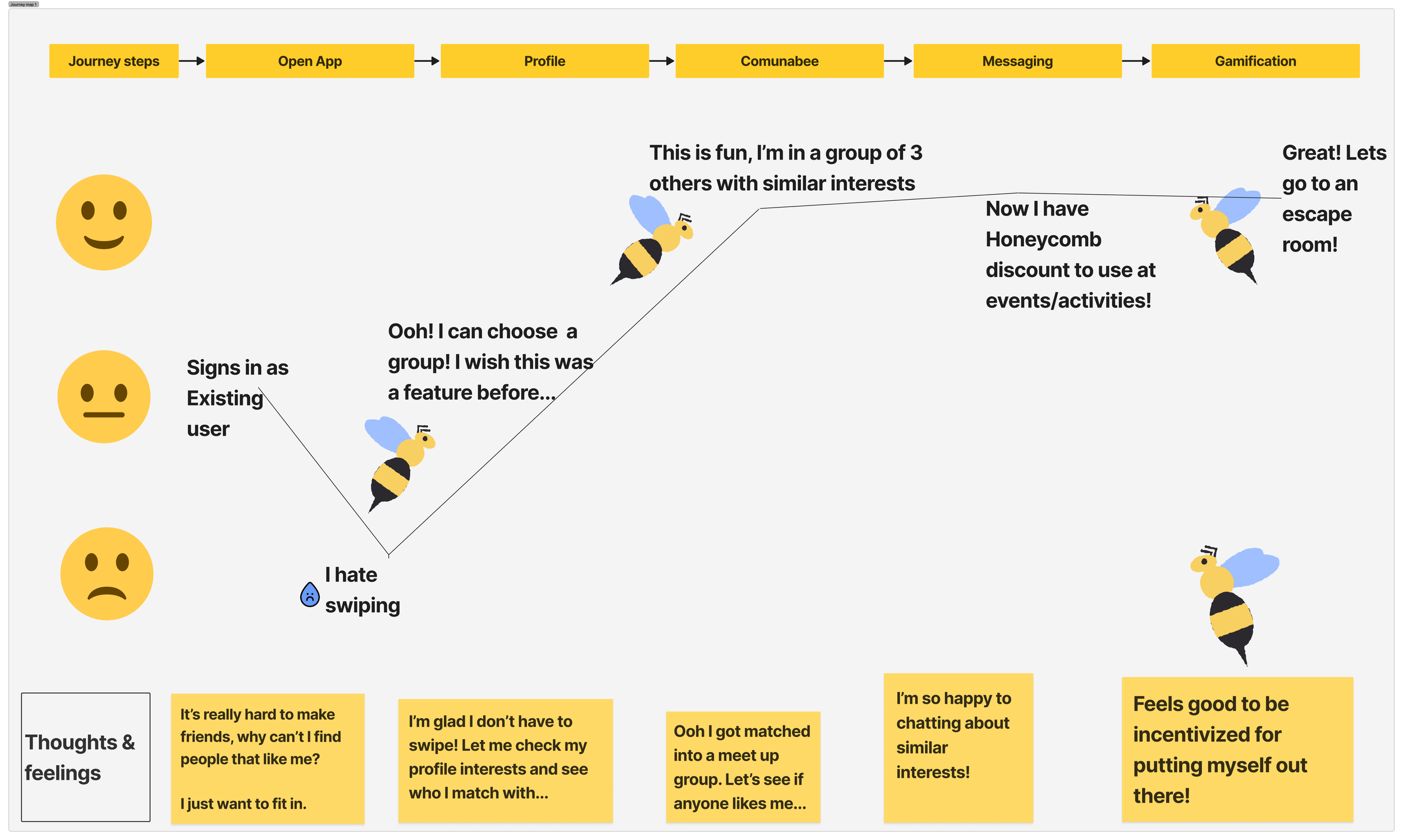
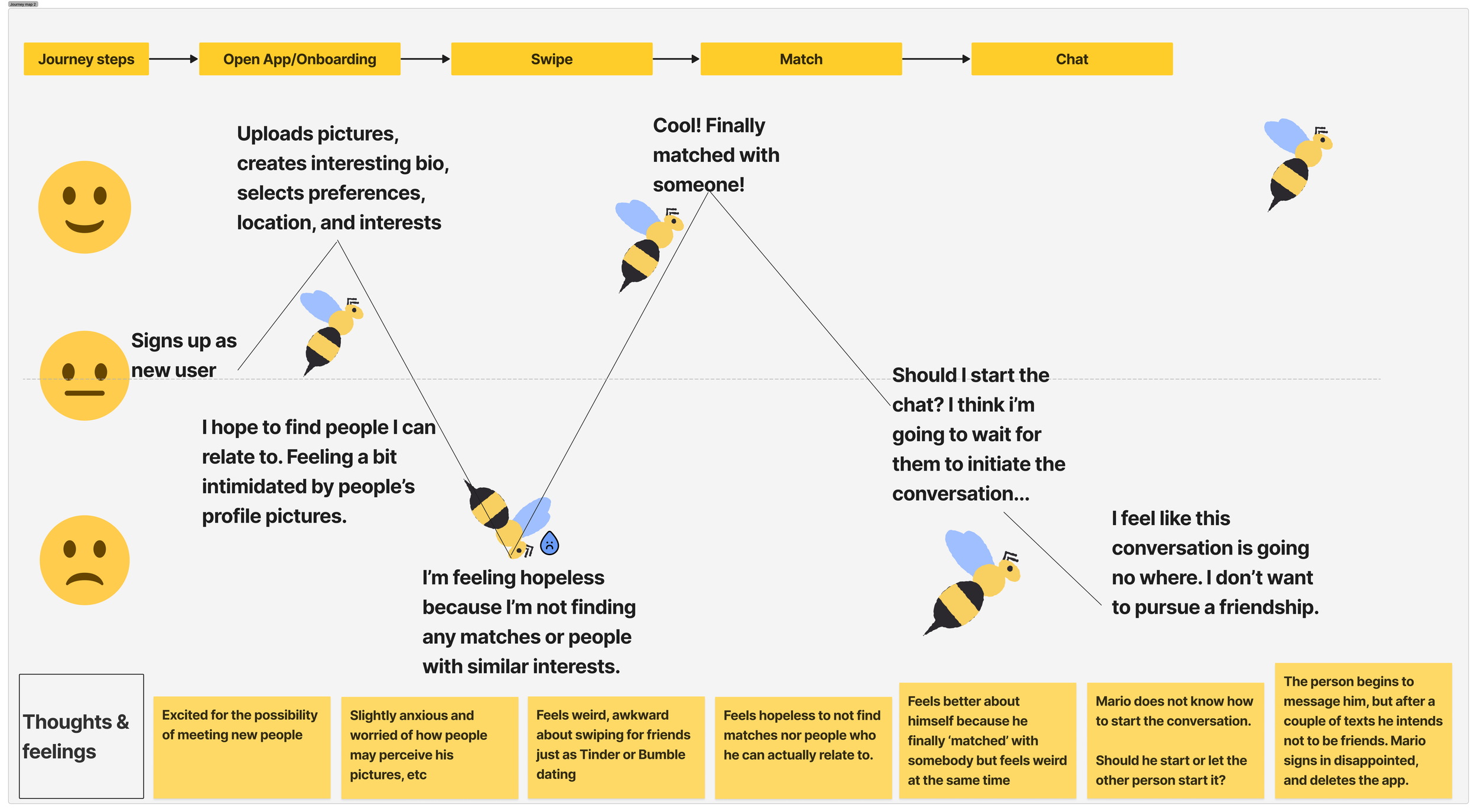
Mario
Mario wants to sign up to meet friends. Because of his personality type, he doesn’t want to initiate conversation. He starts by swiping, and after many hours of swiping, he is not satisfied.
Design approach
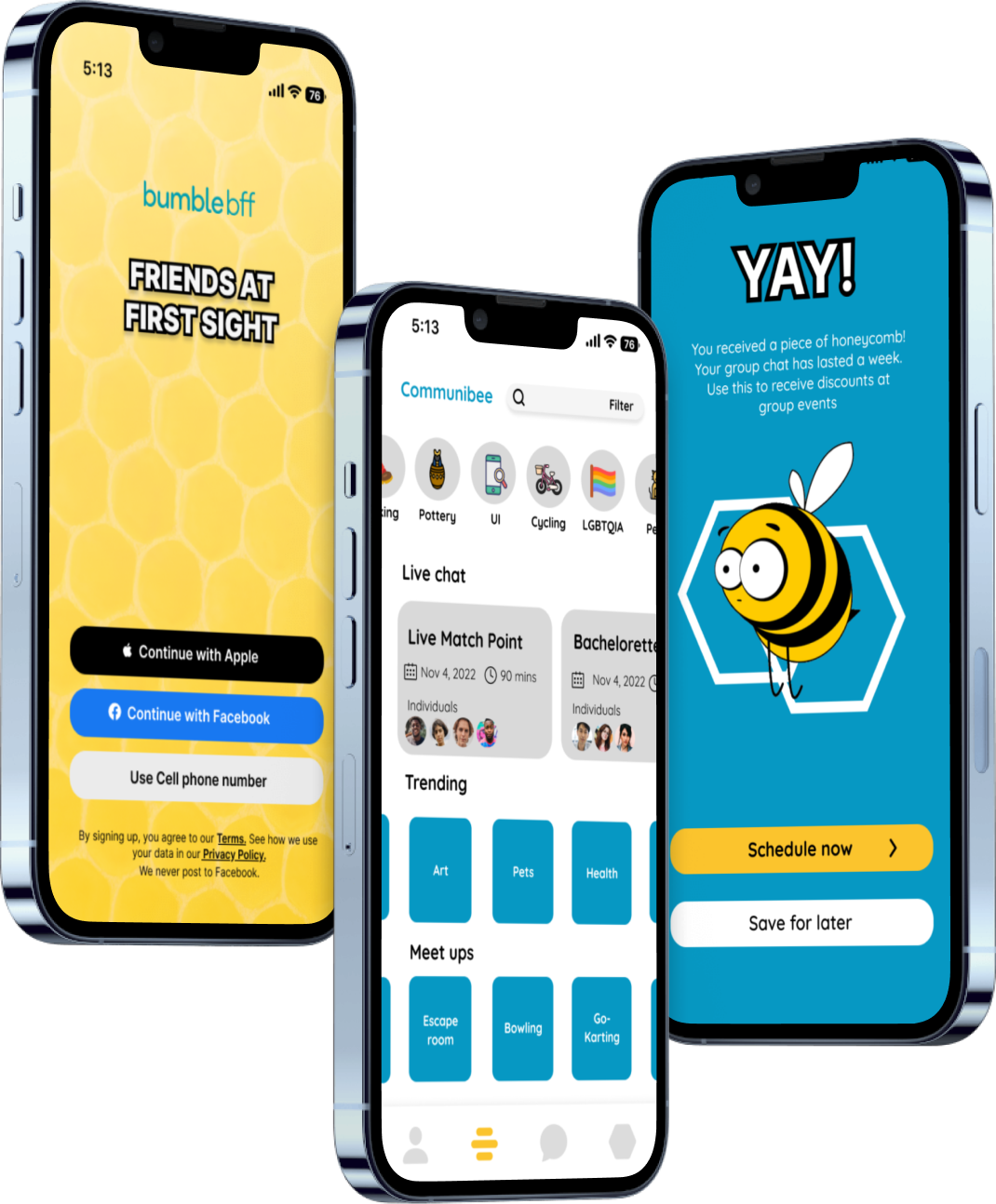
Bumble BFF is a friendship app that aims to help connect people from all walks of life. Using the Communibee section, Francine & Mario can match with groups of interest, without swiping for an individual.
Ideation

User Flow
Ideas
‘Love is blind’ concept no images/voice only
can’t see the image until a certain amount of chats? (incentivizer)
Filter option for ‘type’ of friend i.e.meaningful acquaintance
coffee buddy
community circles- get invited to existing friendship groups
Sketches & Wireframes
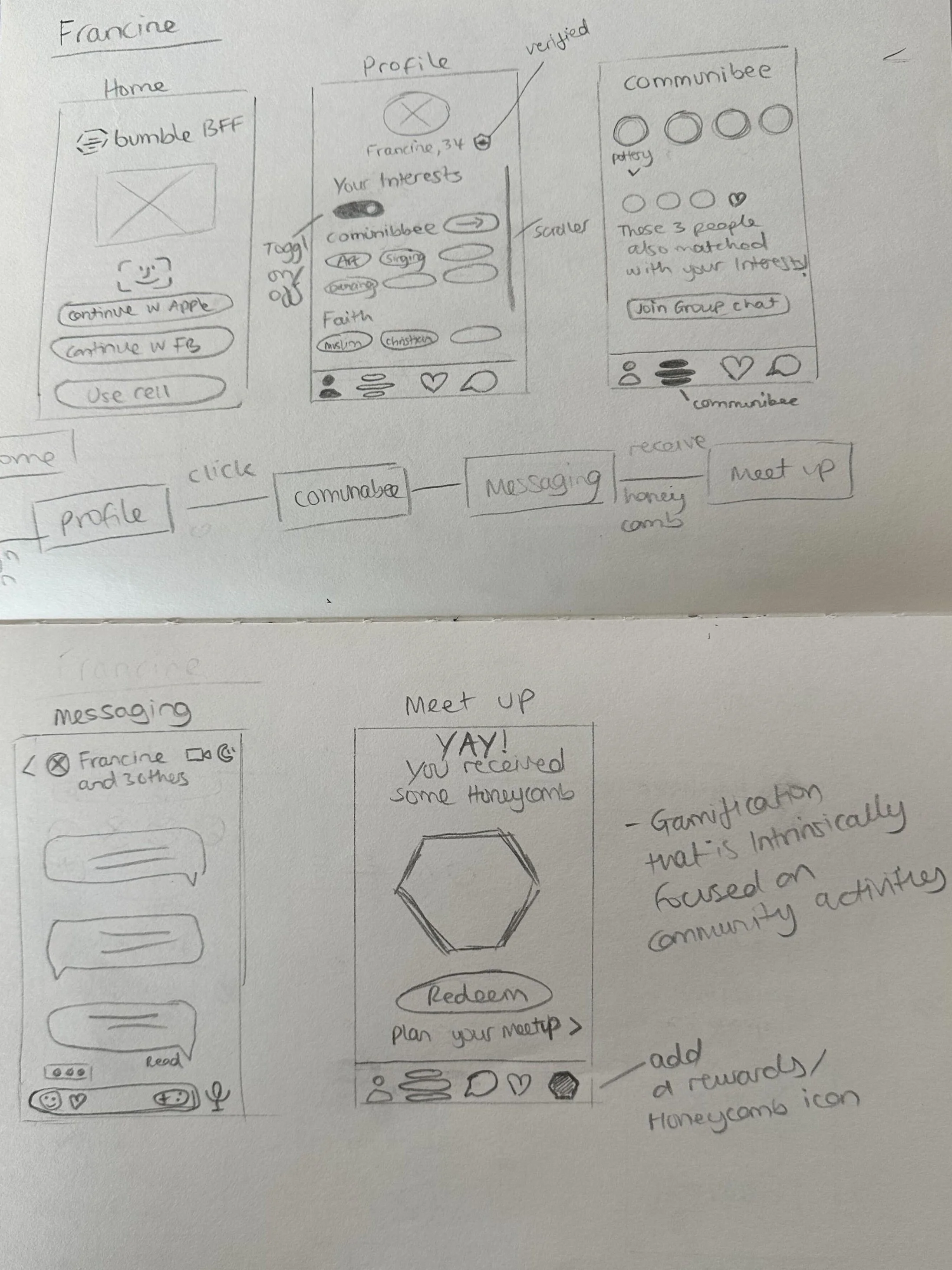
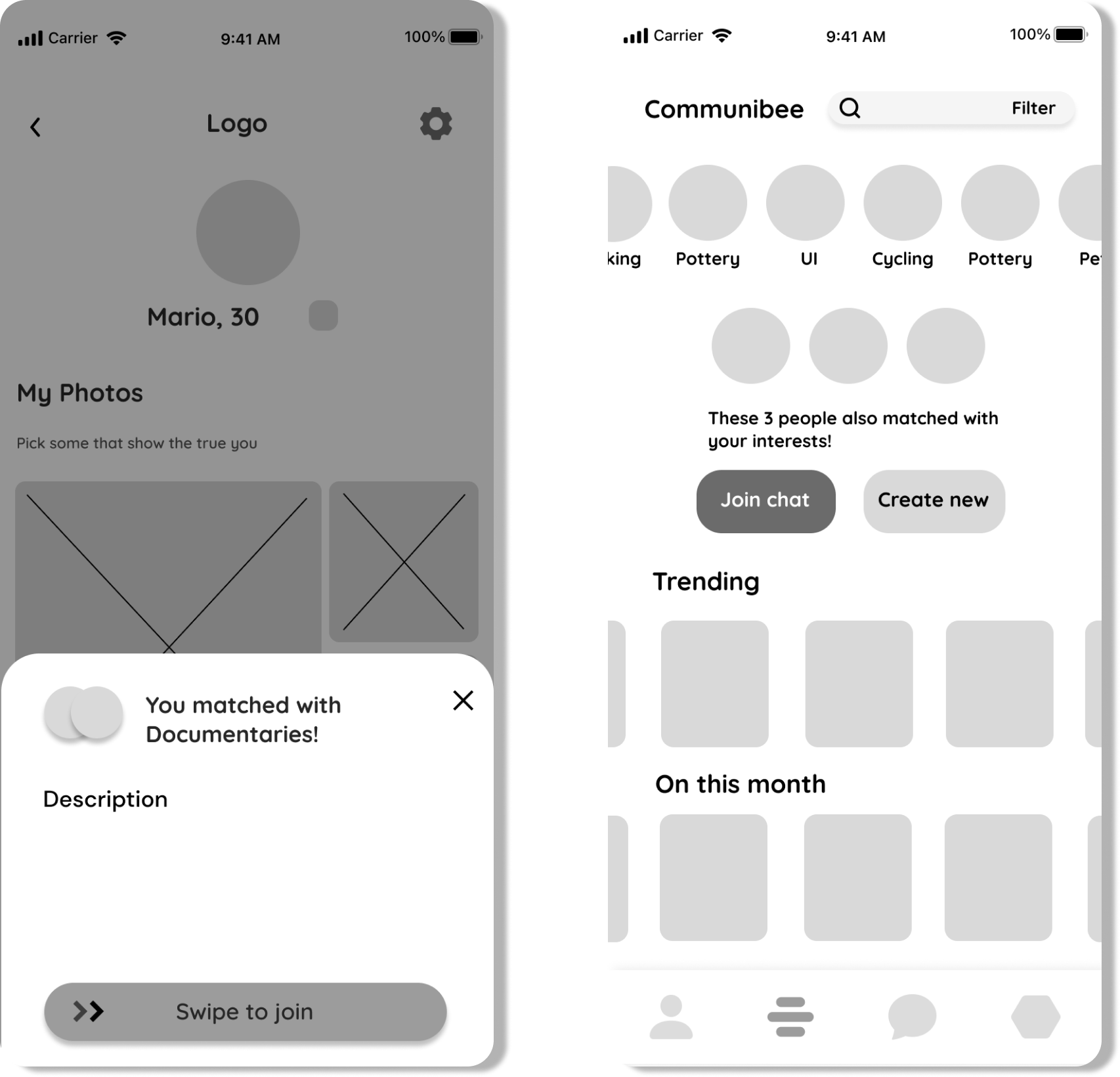
We wanted to focus on the community aspect of the new add on feature, as this is what our user research points to. In this screen we later worked on how a user would be matched with a group.
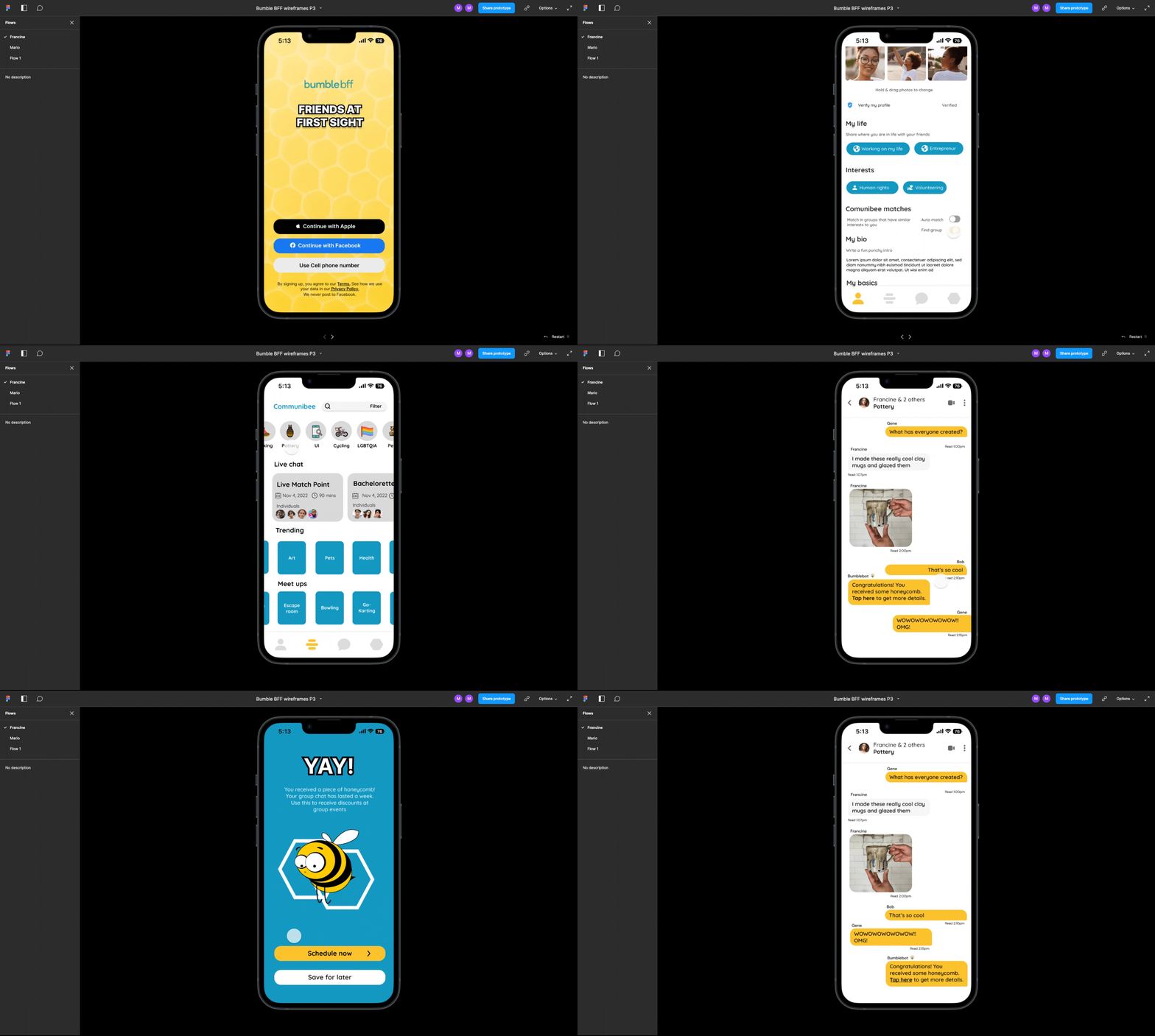
Based on user testing we removed the like button from the nav as it was confusing and allowed people to opt out of the automatic pop up that would appear when entering communibee.
Testing, testing, LOTS of testing!
After receiving some feedback from our usability tests we made some changes to make those features less confusing. We removed the ‘like’ button as people were getting confused about what some of the nav icons were for when compared to the honeycomb rewards. It helped to also explain that the swipe button would be better suited on a mobile device as this was not designed to be tested on a desktop using a mouse.
Finally, adding the gamification provides an incentive for putting yourself (the user) out there!
Next Steps
Time limit on group chat to incentivize talking more often
Adding an admin feature for group chat
Adding a mental health feature or opportunities for personal growth
Conclusion
Overall, I had a great experience working as a team and I learnt how valuable collaboration can be when making a new product. It was an interesting problem to solve as we wanted to get rid of the ‘swiping for a friend’ action to make the search more ‘organic’. Using rewards is a great way to incentivize people to put themselves out there. And on that note…..